Open the cupboard under your kitchen sink. What do you find? Window spray, limescale remover, floor disinfectant, furniture polish. Each one promises a spotless home. And yet, after a thorough clean with all the windows shut, the air in the room is rarely as fresh as it feels. That sharp chemical scent that fades quickly does not necessarily mean it has left the air around you.
What actually happens when we clean
Many common cleaning products release tiny particles and vapours into the air as you use them. Your lungs absorb them quietly, without warning, often without any smell strong enough to make you pause. In small, poorly ventilated spaces – bathrooms, kitchens, hallways – these particles can build up over time. That is not a reason to panic. It is, however, a gentle nudge to think about what we are actually bringing into our homes.
There is something quietly reassuring about the fact that our grandmothers cleaned with a handful of simple ingredients and their homes were perfectly clean. Vinegar, bicarbonate of soda, lemon, hot water. No complicated labels, no hazard symbols. Just nature doing its job.
Ventilation is your best friend
Before you change a single product under your sink, start with the simplest thing: open your windows. Before you clean, while you clean, and after you clean. A draught that might feel inconvenient will carry out of the room what does not belong there. Fresh air from outside – even from a busy street – is in most cases cleaner than the air inside your home after using sprays and chemical cleaners.
Make it a habit to air out each room for at least ten minutes after cleaning. In winter, even a window on the tilt setting is enough. Your lungs will thank you more than you might expect.
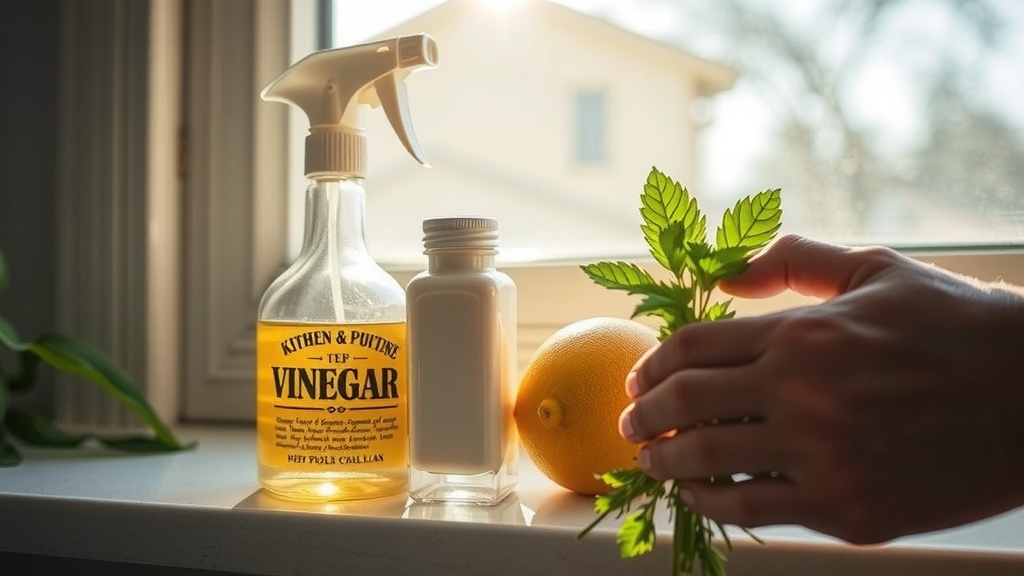
A small swap: natural alternatives that actually work
Switching to natural cleaning products does not have to be dramatic or expensive. Start with just one product and replace it gradually. Here are four combinations that work reliably:
- White vinegar and water – wonderful on windows, mirrors, and shiny surfaces. Dilute roughly one part vinegar to three parts water.
- Bicarbonate of soda with a few drops of lemon juice – a gentle paste for sinks, baths, and stubborn stains. It scrubs without scratching.
- Hot water with a few drops of pure Marseille soap – ideal for floors, worktops, and kitchen surfaces.
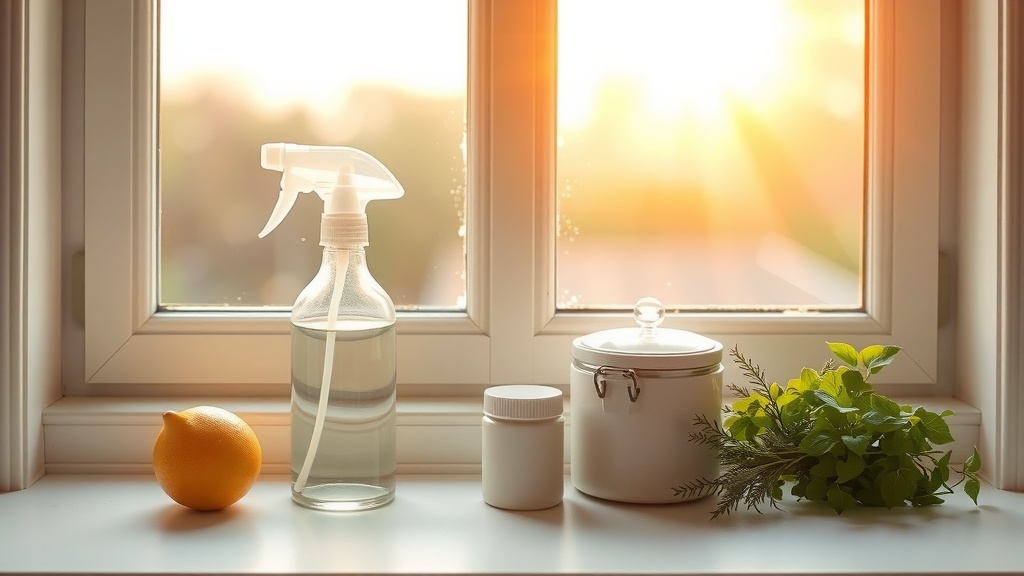
- Tea tree essential oil in water – a natural disinfectant in a spray bottle. It smells clean, without the chemical edge.
You can find all of these in a pharmacy or health shop for very little money. And the bottles? Reusable glass or plastic ones you already have at home.
Watch out for things that smell too good
One thing worth paying attention to is heavily scented products: air fresheners, paraffin candles, intensely fragranced cleaning sprays. A pleasant smell is not a guarantee of clean air. Sometimes it is quite the opposite. Synthetic fragrances are among the most common ingredients that irritate the airways, especially in children and more sensitive people.
If you love the smell of a clean home, try a few drops of lavender or eucalyptus essential oil in a water diffuser instead of a spray. Or simply – fresh herbs on the windowsill. Mint, rosemary, basil. They smell naturally lovely and put no strain on the air at all.
A warm closing thought: cleanliness that breathes
Your home should be a place where your body and mind feel genuinely well. Where the air feels light, not heavy. Where after cleaning you want to take a deep breath, not rush to open the window. Small changes – one more natural product, a little more ventilation, fewer synthetic scents – add up over time. And your home becomes what it was always meant to be: a quiet ally for your health.