A walk might be the most honest thing you do for yourself. No equipment, no preparation, no excuses. You just go. And yet – and this is the lovely part – even the most familiar route through the park or along a forest path can work quite a bit harder for you, without ever stopping being enjoyable. The idea is not to turn your walk into a training session. It is to let it quietly do a little more.
1. Slow down on hills – then lean into them
If your route takes you over any kind of slope, you are holding a small treasure. Walking uphill naturally engages your glutes, calves and core far more deeply than flat ground ever does. Try doing it consciously: as you climb, lean gently forward, shorten your stride and press your whole foot into the hill. You will feel muscles waking up that usually just coast along on flat paths.
And the descent? Take that slowly too. Walking downhill puts more load on the knees than most people realise – slow, controlled steps down are actually a quiet workout for your thighs, without a single squat in sight.
2. Add short bursts of brisker walking
You do not need to run. All it takes is deciding, every now and then: for the next five minutes, I walk a little faster. From one tree to the next. From the bench to the fork in the path. This simple rhythm – a little quicker, then easier again – naturally gets the blood moving, deepens the breath and asks the body to work differently than it does at one steady pace.
What is beautiful about this is that it does not feel like effort. It feels more like playing with the landscape and with your own breath.
3. Use your arms – really use them
Most of us walk with our hands in our pockets or hanging loosely at our sides. Try something different: bend your elbows to a right angle and let your arms swing naturally in opposition to your legs. Left arm forward with the right leg, right arm with the left. It sounds obvious, but conscious arm movement naturally picks up your pace, improves balance and brings the upper body into the picture – shoulders, back, even the abdominal muscles.
This is partly why people who walk with poles – nordic walking – look so satisfied afterwards. They are moving their whole body, not just their legs.
4. Walk barefoot – even just for a little while
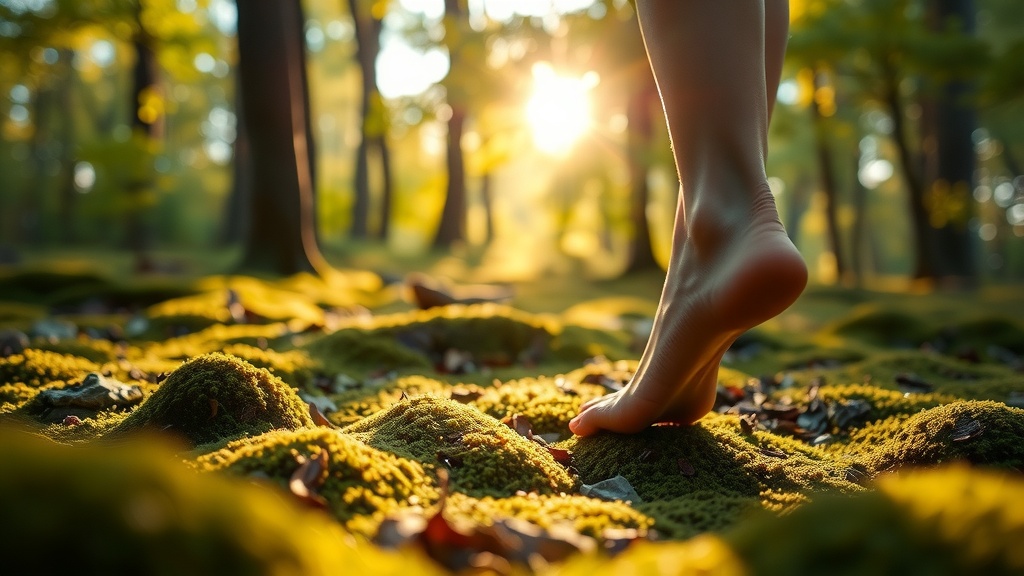
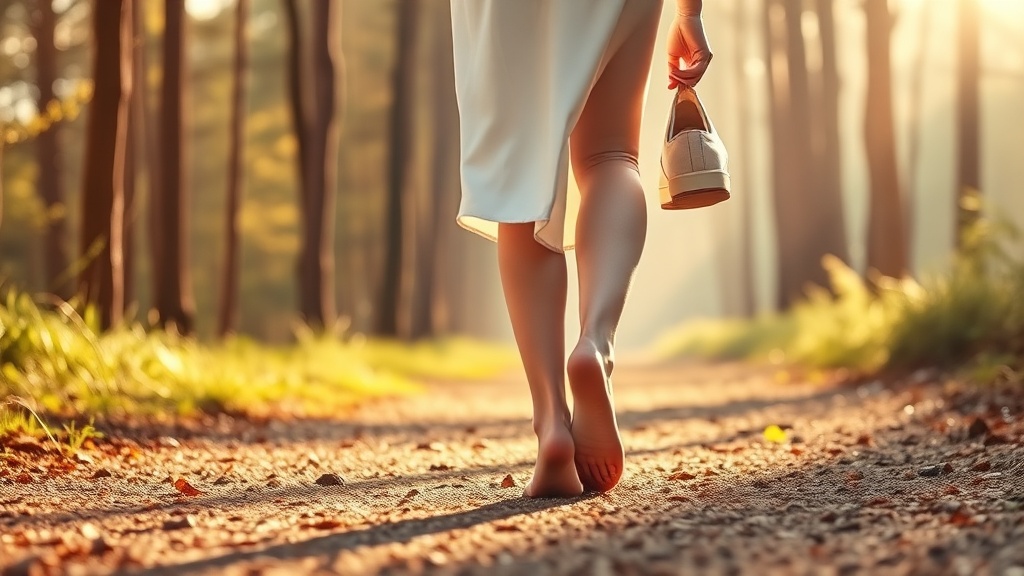
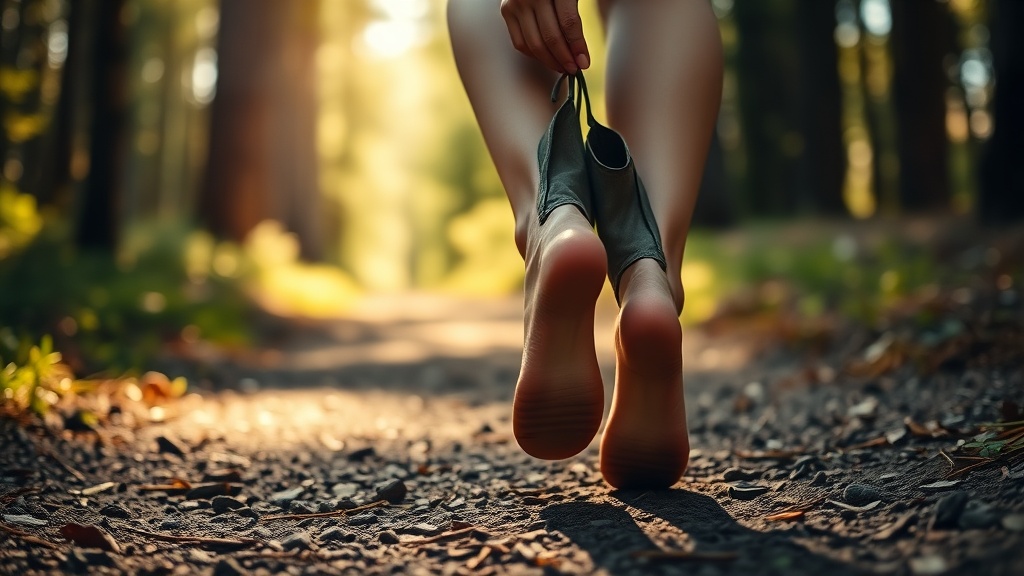
This tip sounds like a small thing, but in practice it is surprisingly powerful. If you have a meadow, a forest path or a sandy track nearby, try taking off your shoes and walking a few hundred metres barefoot. The foot suddenly works in a completely different way – every pebble, every root activates muscles that spend most of their time passive inside a shoe. Your balance improves, your feet wake up and you will – almost inevitably – slow down and start noticing where you actually are.
Walking barefoot on grass carries a quiet bonus too: direct contact with the earth calms the nervous system in a way no shoe can replicate. The Japanese call it shinrin-yoku – a forest bath. We just call it a very good feeling.
A walk as a ritual, not a task
None of these changes require new gear, an app or a fixed plan. Next time you head outside, simply choose one of them and try it. Just one. Maybe today it is the arms. Next week, a hill. Then bare feet on grass.
A walk works best when you do not turn it into an obligation – but let it be what it naturally is: time for yourself, for your body and for your mind. Deepen it just a little, and it gives back generously. You will sleep better that very evening.