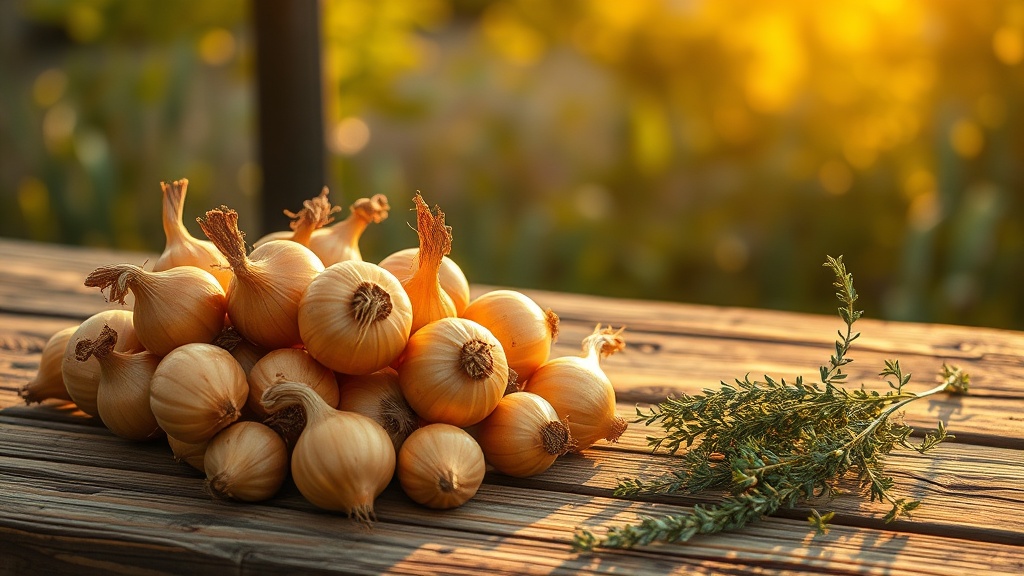
There is always an onion somewhere in the kitchen – tucked in a basket, sitting quietly on the counter, waiting. It never asks for attention, yet the moment you slice into it, the whole room wakes up. Growing up, that sharp, sweet smell meant something warm was on the way: a soup, a stew, something slow-cooked and nourishing. Autumn is truly onion season – golden nets of them hanging in cool cellars like a stored promise of warmth through the cold months ahead.
What onion does for your body
- Gently supports your immunity. Onions are rich in natural compounds that help the body stay balanced – especially welcome during the colder months when the air turns dry and sharp.
- Nourishes your gut. They contain natural fibres that feed the good bacteria in your digestive system, keeping everything moving gently and comfortably.
- Cares for your heart and circulation. Folk traditions across Europe have long linked daily onion consumption with healthy blood flow – and generations of grandmothers were quietly onto something.
- Soothes the airways naturally. A hot onion broth at the first sign of a cold is not just an old wives tale – onion has a genuinely calming effect on an irritated throat and congested nose.
- Delivers sulphur and silicon. These quiet minerals support hair, nails and skin from the inside – and onion is one of the most generous natural sources of both.
How to choose, store and prepare the best onion
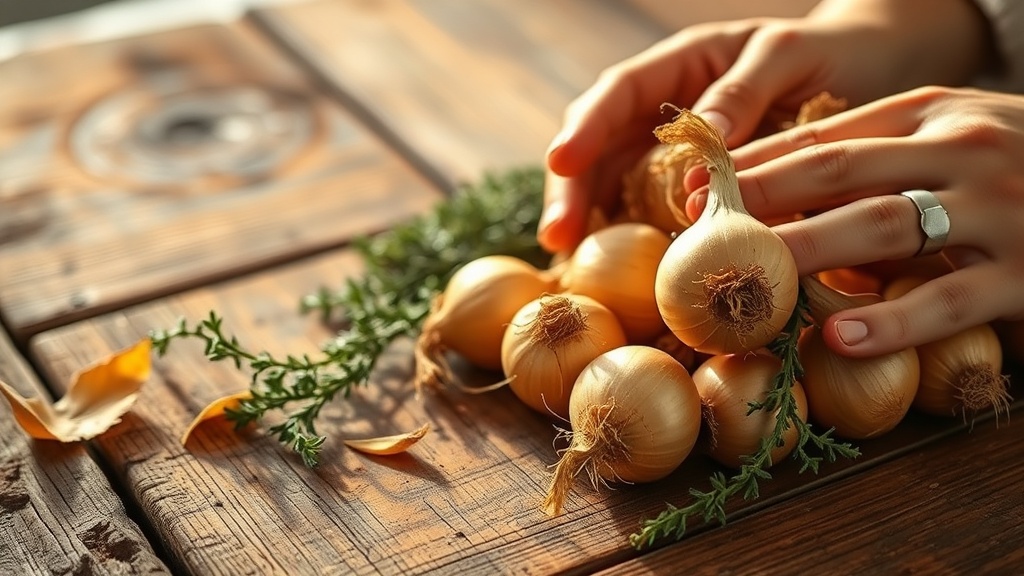
When shopping, look for onions that feel firm and heavy, with dry, papery skins and no strong smell at the surface. If the skin is damp or the onion feels soft, it is past its best. At home, keep them in a cool, dark, well-ventilated spot – never in the fridge, where moisture will cause them to soften and spoil quickly. A simple wire basket or a wooden bowl on the counter works beautifully.
One of the loveliest things about onions is how completely they transform with heat. The sharp, eye-watering bite of a raw onion melts slowly into something sweet and golden when cooked low and slow. But raw onion retains the most of its beneficial qualities – try adding it finely sliced to a salad with a little olive oil and salt, and you may be surprised how gentle it can taste.
Red onions are milder and gorgeous in fresh dishes. Spring onions are perfect for a quick stir or as a bright garnish. Each variety has its season and its place – and all of them deserve a little more appreciation than they usually get.
Try this today: slow-caramelised onion on toast
Take two large yellow onions, slice them into thin half-rings and let them melt slowly in a pan with a knob of butter and a pinch of salt – give them a full twenty minutes over a gentle heat, without rushing. When they turn soft, golden and deeply sweet, pile them onto a slice of toasted sourdough, scatter over some fresh thyme and perhaps a little crumbled goat's cheese. It is the kind of food that fills the whole flat with warmth and tastes like it took far more effort than it did.
The onion rewards patience – the slower you treat it, the more it gives you back.
This week, try seeing it a little differently: not just a background ingredient, but a quiet, faithful ally that is always within reach. One onion a day – in a soup, on bread, or raw in a salad – and your body will quietly thank you for it.