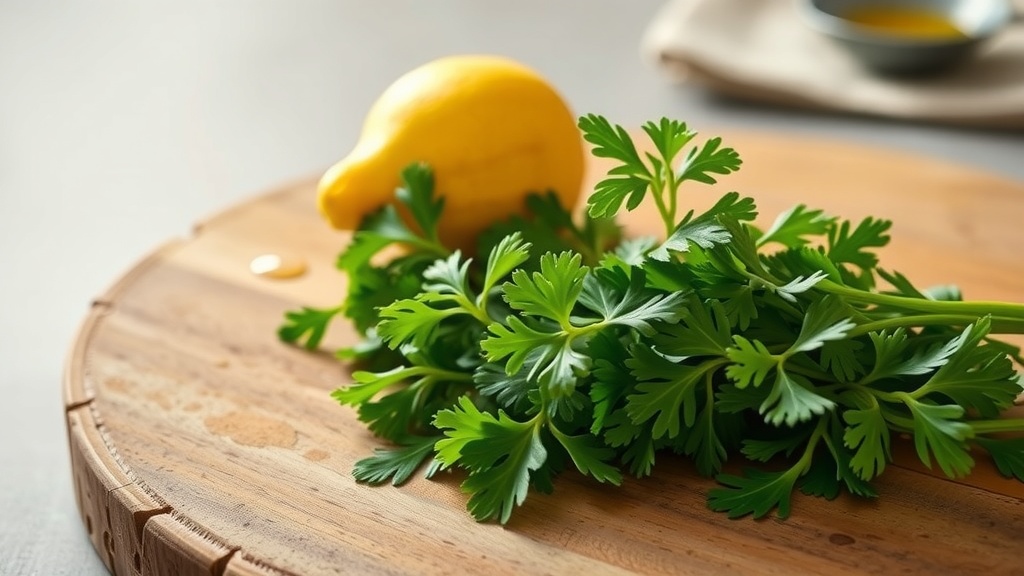
It grew in a narrow strip along the garden wall, right beside the chives, coming back every spring without being asked. Parsley is one of those herbs nobody makes a fuss about – it arrives on the plate as a matter of course, a green dot on soup or a handful scattered over potatoes. And yet it is one of the most nourishing plants in the everyday kitchen. It simply deserves a little more attention.
What parsley does for your body
- Delivers a generous hit of vitamin C. Fresh parsley contains a surprising amount – a small handful of chopped leaves can cover a large part of your daily needs, especially welcome in winter when fresh greens feel scarce.
- Supports the body's natural drainage. Parsley has a gentle, natural effect on the kidneys, helping the body release excess fluid so you feel lighter and more comfortable.
- Quietly nourishes bones and teeth. It is rich in vitamin K, which plays a steady, understated role in keeping bones strong – the kind of nutrient that is easy to overlook in daily eating.
- Freshens breath the natural way. The chlorophyll in parsley acts as a gentle, plant-based breath freshener, which is why cooks have served it alongside garlic dishes for centuries.
- Offers a plant-based source of iron. For those who eat little or no meat, parsley is a welcome source of iron – and a squeeze of lemon juice on the same plate helps the body absorb it more easily.
How to choose, store, and use parsley well
At the market or shop, look for a bunch with firm, deeply green leaves and no yellow patches. The stems should feel sturdy, not limp. At home, wrap the bunch in a damp paper towel, stand it in a glass with a little water, or tuck it into a resealable bag in the fridge – it will stay fresh and bright for a week or more.
Root parsley, the thick white variety, is wonderful in soups, broths, and roasted root vegetable trays. Flat-leaf or curly leaf parsley belongs in food fresh, added at the very end. Heat destroys much of the vitamin C and the delicate aroma, so scatter it over the finished dish rather than stirring it into a boiling pot.
Parsley pairs beautifully with garlic, lemon, olive oil, fish, and legumes. Try it somewhere unexpected too: blended into hummus, whisked into a salad dressing, or even stirred into a homemade lemonade for a surprisingly fresh lift.
A green sauce that transforms an ordinary lunch
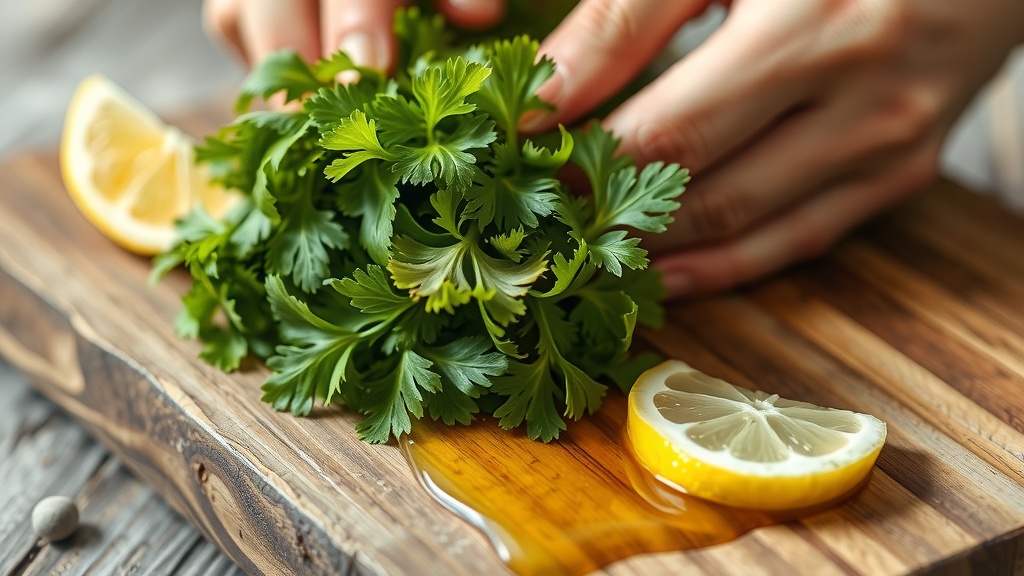
Try making a simple parsley dressing that will elevate almost anything – boiled potatoes, grilled vegetables, lentils, or roast chicken. Finely chop a large handful of fresh parsley and mix it with two tablespoons of olive oil, the juice of half a lemon, a pinch of salt, and one small clove of garlic pressed through a crusher. Let it rest for five minutes so the flavours can settle into each other, then spoon it generously over the food just before serving. It takes no more than a few minutes on a weekday and tastes like something from a sun-warmed Italian kitchen.
Parsley is waiting in your fridge or garden bed, ready whenever you are. Use it more generously this week – in soup, over potatoes, in a dressing. One small green habit that quietly does a great deal of good.