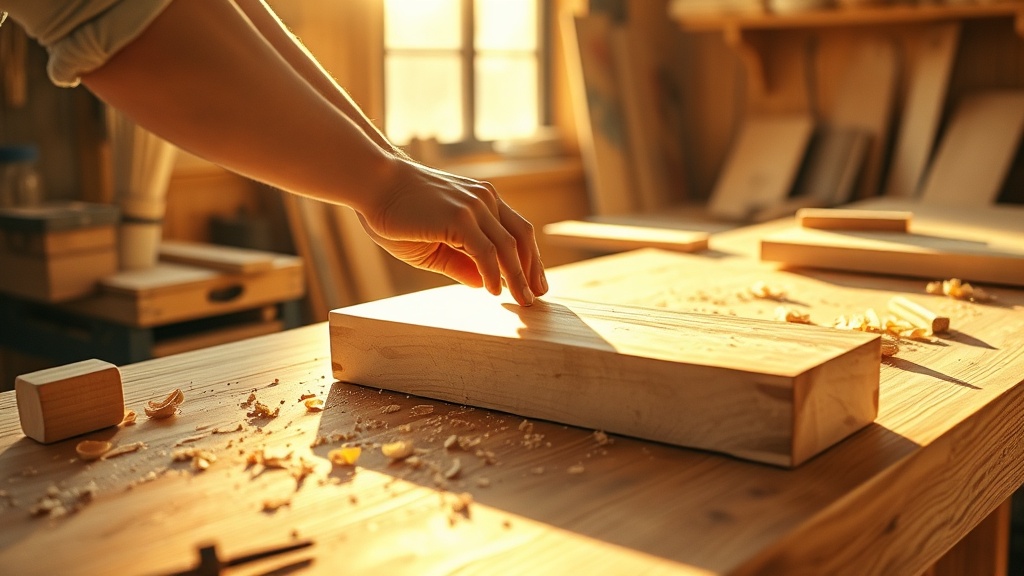
There are moments when thoughts arrive too fast and the body cannot keep up. The heart races, breath shortens, the world feels unbearably loud. In those moments, scrolling doesn't help. Neither does another podcast or another cup of coffee. What helps? Your hands. A tangible material. Work that leaves a trace – even just a small wooden shelf or a lopsided clay mug, but something real.
The body remembers what the mind forgets
Our hands are rich with nerve endings. When we touch wood, clay, wool or dough, the brain receives immediate feedback – I am here, this is real, I can do this. This feeling of being grounded isn't mystical. It's simply the body's natural response to sensory contact with the physical world.
Making things forces us to be present. You cannot sand a piece of wood while replaying a conversation from three weeks ago. Your hands demand attention – and inside that attention, quietly, lives calm.
A small object, a surprisingly large feeling
One of the most beautiful things about working with your hands is that the result is tangible. At a time when most of our work exists only as files in the cloud or messages in apps, it is deeply liberating to hold something you made yourself. A wooden spoon. A candle. A knitted scarf. A ceramic bowl.
This feeling of completion – sometimes called the IKEA effect of self-creation – is profoundly satisfying. The brain releases a little dopamine, you smile, and for a moment you forget what was weighing on you.
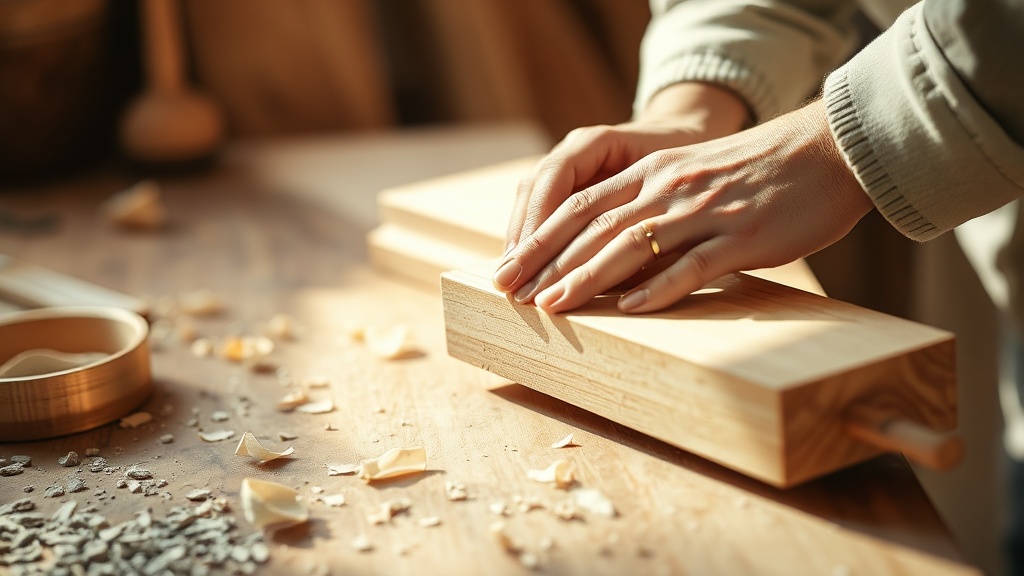
Where to begin – without any pressure to be perfect
The most common obstacle isn't time or money. It's the belief that we simply aren't talented enough. But working with your hands isn't about talent – it's about process. And process is available to everyone.
- Wood: Start with something simple – a small shelf, a wooden tray, or just sanding an old piece of furniture. Many cities offer beginner workshops where tools and guidance are included.
- Clay and ceramics: Throwing on a wheel is meditation in physical form. Your first piece will be wonky – and that's exactly the point.
- Knitting or crochet: The rhythmic movement of needles calms the nervous system in a way that resembles deep breathing. And you can do it from your sofa.
- Cooking and baking: Put the recipe app away and pick up some seasonal vegetables instead. The kitchen is a workshop you already have access to every single day.
The workshop as sanctuary – even your kitchen counts
People who found their way to making things during a difficult period often describe the same experience: the workshop became a place with different rules. No notifications. No expectations. Just material, tool, and hands.
You don't need an actual workshop. A corner of the living room where your knitting lives is enough. Or a kitchen table where you knead bread dough on Saturday mornings. Or a garden where you press bulbs into the soil and feel the earth between your fingers.
The key is regularity – not perfection. Once a week, set aside an hour for working with your hands. No phone, no background noise (or with music, if that helps). Just you and the material.
The beauty of imperfection
The Japanese have a beautiful concept called wabi-sabi – finding beauty in what is imperfect, impermanent and incomplete. A handmade object carries the marks of its making. A slightly uneven line, a fingerprint pressed into clay, stitches that aren't quite uniform. And it is precisely in those marks that its soul lives.
The next time you feel your thoughts spinning too fast, try reaching for something physical. Pick up a piece of wood, a ball of wool, or a handful of flour. Let your hands work. Your mind will find its way to rest on its own.