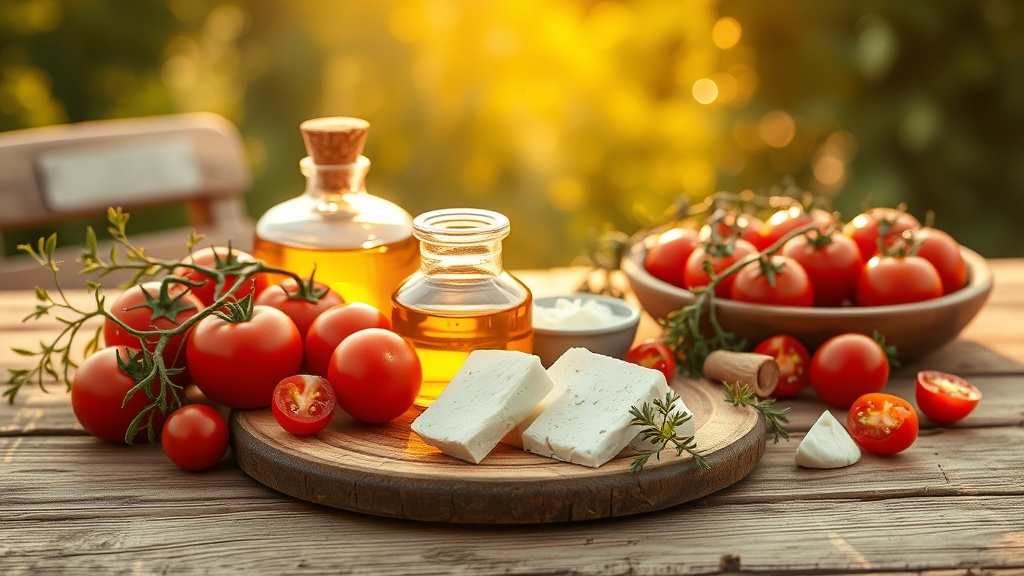
Olive oil, fresh herbs, ripe tomatoes, a handful of nuts, a glass of water with a slice of lemon. The Mediterranean way of eating doesn't look like deprivation – it looks like an invitation to the table. That's exactly how to approach it. Not as a strict diet with rules, but as one beautiful day full of flavours, colours, and calm.
Why one day is enough to begin
The most common mistake we make when trying to change how we eat is trying to change everything at once. The Mediterranean approach is naturally gentle – there's nothing extreme about it. Vegetables, legumes, whole grains, fish, olive oil, a little cheese, fruit as dessert. No calorie counting, no weighing portions. Just fresh, simple food prepared with care.
Try building one day the way someone on a Greek island might – and notice how naturally you settle into that rhythm.
Breakfast: a slow, flavourful start
Forget the rush and the packet of muesli. A Mediterranean breakfast is small but intentional. Try a bowl of Greek yoghurt with a spoonful of honey, a handful of walnuts, and fresh fruit – figs, peaches, or blueberries. Or a slice of wholegrain bread with a thin layer of feta, a few olives, and sliced tomatoes. A cup of black coffee or herbal tea alongside.
The beauty is that this kind of breakfast satisfies without weighing you down. Your body gets what it needs, and you carry real energy through the morning.
Lunch: the main event of the day
In Mediterranean culture, lunch is a celebration. You sit, eat slowly, talk. Try it today – even just once.
- The base of the plate: a generous portion of vegetables – roasted peppers, courgette, aubergine, cherry tomatoes
- Protein: baked fish (salmon or cod), eggs, or chickpeas
- Grains: a handful of bulgur, quinoa, or wholegrain couscous
- Dressing: olive oil, lemon juice, salt, fresh oregano or thyme
Add a slice of good bread and a glass of water. No rushing. No phone at the table.
Afternoon snack: a small, quiet pleasure
A Mediterranean snack is understated but nourishing. A handful of almonds or walnuts. A few pieces of fresh fruit. Or hummus with slices of cucumber and carrot. Nothing complicated – just natural food that carries you through to dinner without hunger or the temptation to reach for biscuits.
One lovely thing you may not have considered: olives are technically a fruit. And a small bowl of olives as an afternoon snack is completely ordinary in southern Europe. Try it – it's surprisingly satisfying.
Dinner: light and warm
In Mediterranean cooking, the evening meal is lighter than lunch – and that's exactly what the body appreciates. A simple lentil soup with tomatoes and cumin. Or a bowl of warm bean stew with a drizzle of olive oil and fresh parsley. Perhaps a light salad with grilled vegetables and a hard-boiled egg.
A glass of water with lemon or mint alongside. And if you like – a small square of dark chocolate or a couple of dates as a sweet ending to the day.
What to carry into the days ahead
A Mediterranean day won't teach you perfection – it will teach you attention. You'll notice how you feel when you eat freshly. How food without unnecessary additives actually satisfies. How your afternoon energy shifts when lunch wasn't heavy.
You don't need to do this every day starting tomorrow. One day a week is enough. Then maybe two. And slowly you'll begin to notice that olive oil instead of margarine, lentils instead of processed meat, and fresh herbs instead of flavour enhancers aren't sacrifices – they're small pleasures that accumulate.
Mediterranean cooking isn't about where you live. It's about how you relate to your food. With care, with calm, and with joy in simple things.