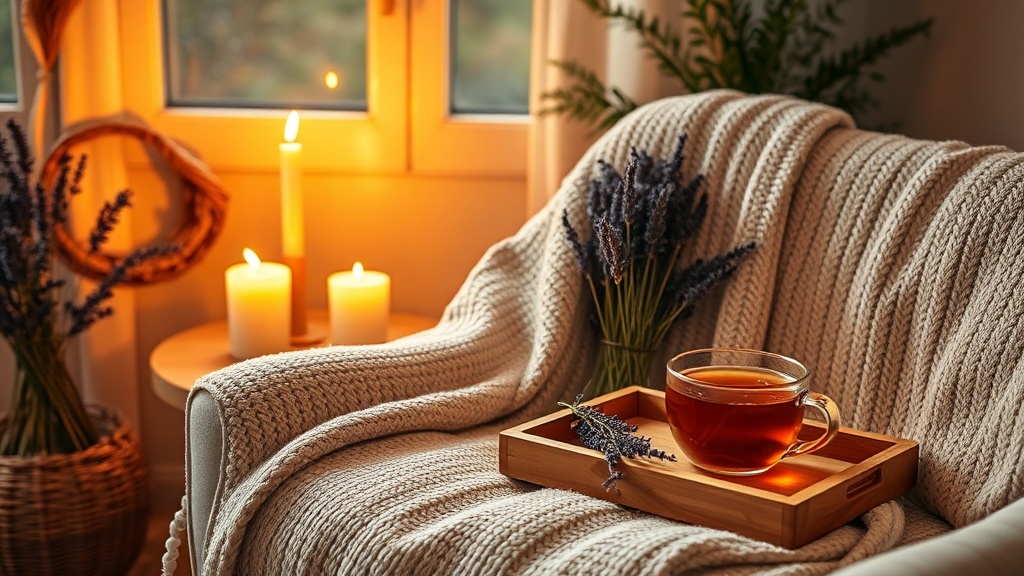
You know that feeling. You close the door behind you, drop your bag – and instead of relief, you are greeted by chaos. A pile of laundry on the chair, screens flickering, background noise, harsh overhead lights. Your body is waiting for a signal that it is safe. But the signal never comes. Your nervous system stays on high alert, as if you were still standing in the middle of a busy street.
The good news is that your home can be different. You do not need to renovate or spend money on expensive furniture. It is about small, conscious changes – the kind your body will actually feel.
What your nervous system needs to settle down
Our bodies respond to their surroundings far more sensitively than we realise. Light, sound, scent, order or disorder – all of it sends signals directly to the brain. Warm, dim light says: it is evening, you can slow down. Quiet or soft natural sounds say: you are safe. Clean air and natural scents say: you can breathe here.
Harsh fluorescent light, a television running in the background, overflowing shelves and piles of things waiting to be dealt with – all of this keeps the nervous system in a low but constant state of tension. And then we wonder why we wake up tired even after a full night of sleep.
Start with light
Light is one of the most powerful signals we give our bodies. In the morning, we need bright, natural light – ideally a few minutes by the window or outside before reaching for the phone. In the evening, it is exactly the opposite. Warm, dim light – candles, lamps with a soft warm bulb, the natural fading of dusk – helps the body shift into rest mode.
Try one evening with the overhead lights off, using only lamps and candles. Watch how the atmosphere in the room – and inside you – shifts within minutes. It is almost surprising how quickly the body responds to such a simple cue.
Silence as a luxury you can actually afford
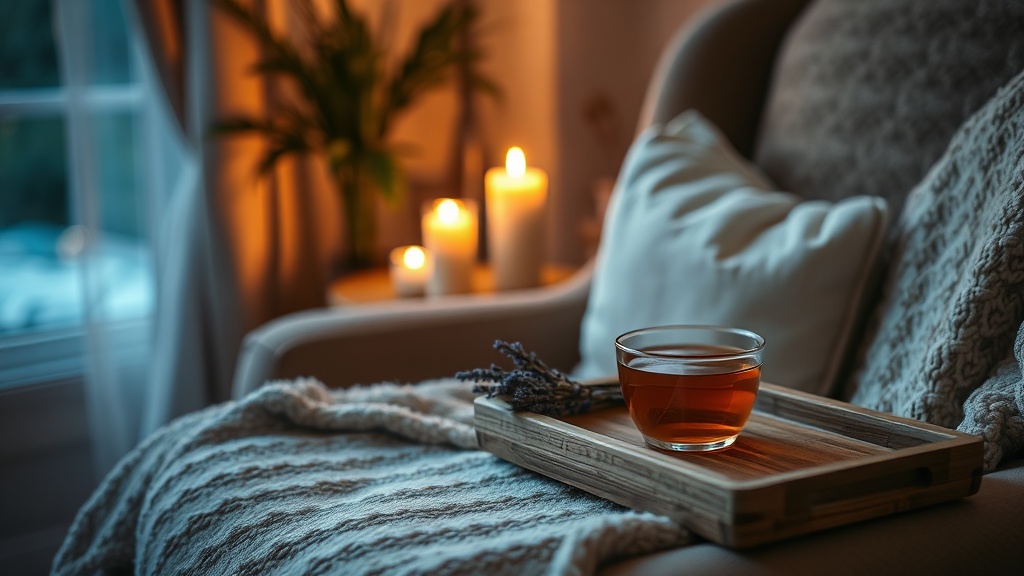
Silence is rare these days. But you do not need perfect silence – you just need to consciously reduce background noise. A television running for no one, a radio nobody is listening to, notifications every five minutes – all of this keeps the brain on standby.
Try one evening without the television. Instead, play soft wordless music, nature sounds, or simply let the home be quiet. It might feel strange at first – that is completely normal. The body needs time to relearn stillness, the way eyes need a moment to adjust after bright light.
Scents that speak directly to the body
Smell is the only sense that travels directly to the part of the brain connected to emotion and memory. That is why certain scents can calm us almost instantly – or, just as quickly, unsettle us. Synthetic air fresheners and cheap artificially scented candles can paradoxically add to tension, even when they are marketed as relaxing.
Reach instead for natural alternatives: a drop of lavender or cedarwood essential oil in a diffuser, a sprig of dried rosemary, a small bowl of orange peel and cloves. Or simply open a window and let the outside air in – even that carries a scent the body recognises as safe.
Order that does not need to be perfect
Your home does not need to look like a magazine. But one calm corner – a chair without a pile of things on it, a clear table, an empty surface on the bedside table – can become your anchor point. A place your eyes return to and your body quietly exhales.
Try doing one small thing each evening: carry the mugs to the kitchen, fold the blanket, clear the sofa cushions. Not to have a tidy home – but so that morning greets you with a calmer view. Your morning self will thank you.
One ritual that changes the whole evening
The most powerful thing you can do for your home – and your nervous system – is to create a small transition ritual. A moment between the outside world and your own space. Changing into slippers, a glass of water, three slow conscious breaths by the window, a cup of herbal tea without the phone.
The body loves predictability. When you give it a repeating signal that it is time to switch off, it begins to respond faster and faster. Like a conditioned reflex – but the lovely kind.
Your home does not need to be perfect. It just needs to be yours – warm, quiet, and a little calmer than the world outside the door.