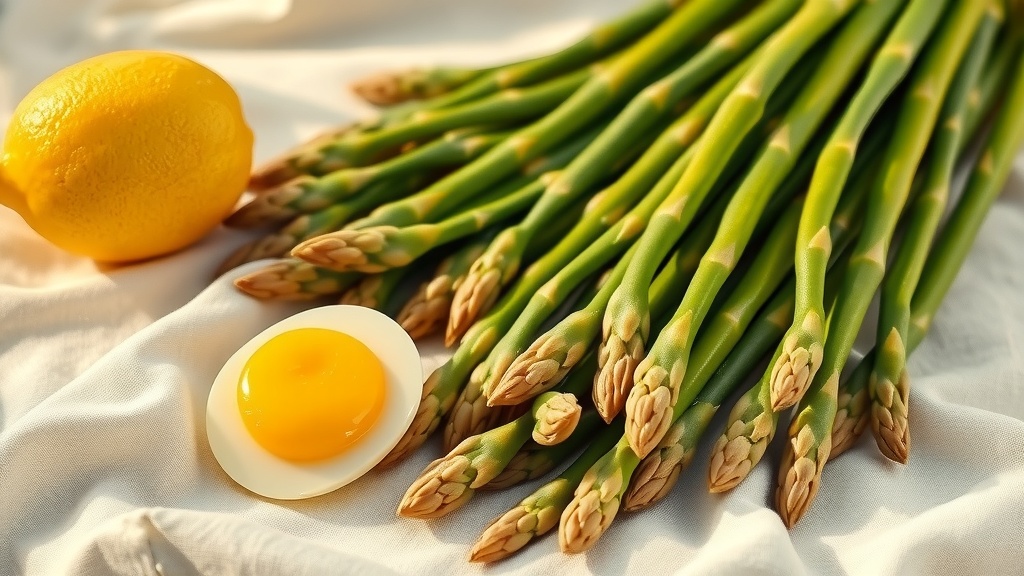
Just a few weeks ago the field was bare and cold. Then, almost overnight, slender green shoots push up through the soil as if the earth simply could not wait any longer. Asparagus is one of those rare foods that belongs to a moment: brief, fragrant, impatient. Grandmothers cooked it simply, with butter and a soft-boiled egg, and they were right. Sometimes a little is all it takes to make something perfect.
What asparagus does for your body
- Gently cleanses and drains. Asparagus naturally supports the kidneys and helps the body release excess water, working like a quiet spring clean from the inside out.
- Nourishes your gut and microbiome. It contains inulin, a natural prebiotic that feeds the beneficial bacteria in your intestines and helps keep digestion running smoothly.
- Gives energy without heaviness. Light and easy to digest, asparagus is rich in B vitamins that help your body convert food into energy, leaving you feeling nourished rather than weighed down.
- Supports calm and a good mood. Asparagus is one of the few vegetables with a natural supply of tryptophan, the building block your body uses to make serotonin. A modest vegetable with a surprisingly deep effect.
- Cares for your heart and vessels. Thanks to its folate, potassium and antioxidants, asparagus helps keep blood vessels supple and the heart in good shape, especially when paired with a walk in fresh air.
How to choose, store and prepare the best asparagus
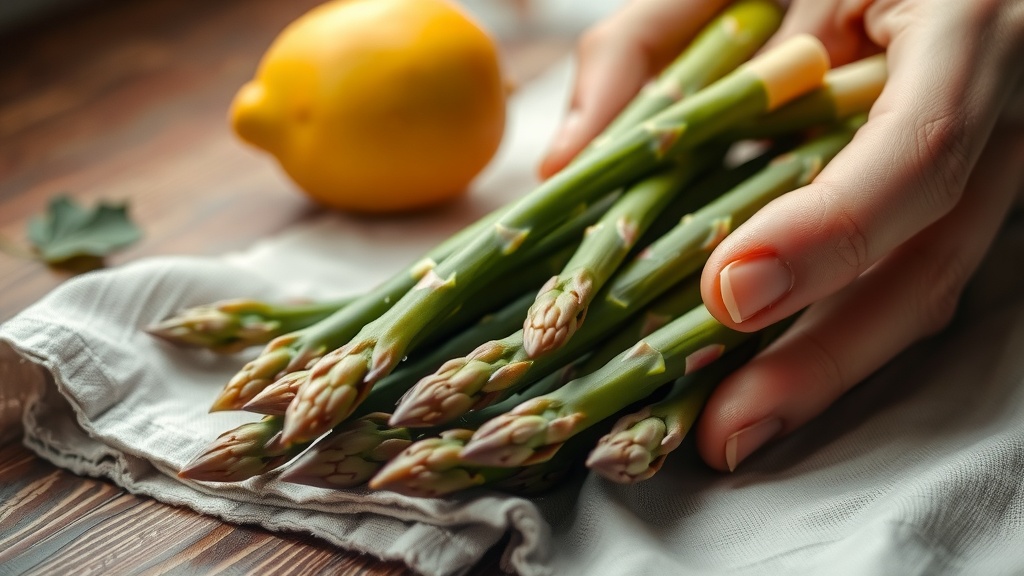
At the market, look for spears with firm, tightly closed tips and smooth, glossy skin. Thinner stalks are more tender and cook quickly. Thicker ones have a bolder flavour and are wonderful grilled or roasted in the oven. Avoid bundles where the tips are splayed or the stalks look limp – the asparagus has aged past its best.
At home, store it like a bunch of flowers: stand the bundle upright in a glass with a little cold water and loosely cover the tips with a plastic bag. In the fridge it will stay fresh for three to four days. Before cooking, simply snap off the tough woody end – it will break naturally at exactly the right point.
Asparagus pairs beautifully with eggs, butter, lemon, parmesan, ham, and fresh herbs like tarragon and chives. Short cooking times are everything: overcooked asparagus loses both its colour and its flavour. Three to five minutes in well-salted boiling water, or a quick toss in a hot pan with a drizzle of olive oil, is all it needs.
Try this today: asparagus with a soft egg and lemon butter
Cook a handful of asparagus spears in salted boiling water just until they are still vivid green and have a gentle bite. In a small pan, let a knob of butter melt slowly until it turns golden, then add a squeeze of lemon juice and a pinch of salt. Pour this simple dressing over the asparagus and place a soft-boiled egg alongside. Scatter over some fresh chives and serve straight away. The whole thing takes ten minutes and tastes like a spring Sunday morning.
Asparagus is a vegetable that does not wait, and that is part of its charm. Treat yourself to it this week while the season is in full swing. Pick up a bundle at the market, cook it in moments, and let the flavours of early spring land right on your plate.