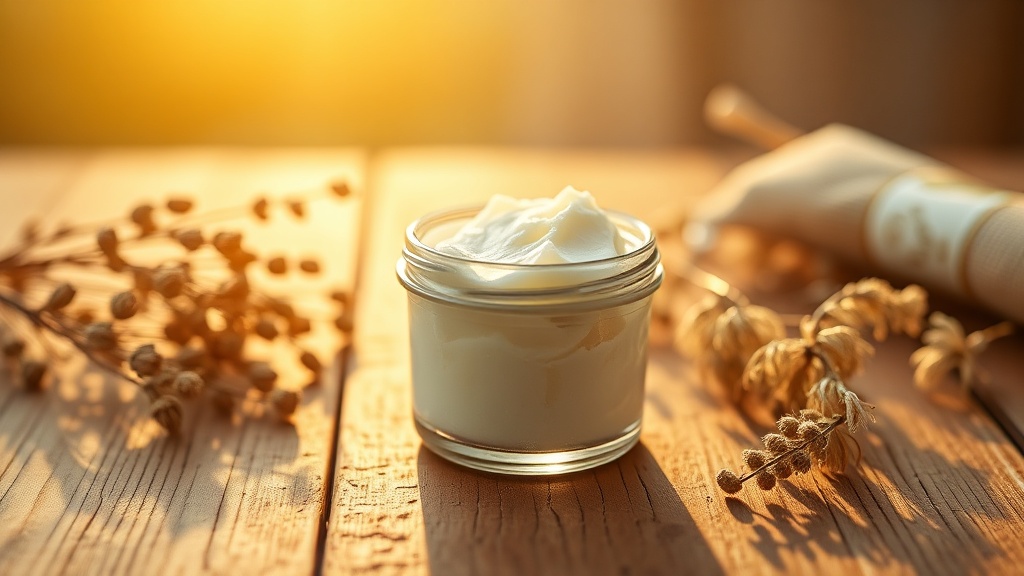
Sometimes the simplest thing changes everything. No complicated ritual, no expensive serum with ten active ingredients. Just a small piece of creamy butter that melts in your palm like snow – and your skin breathes a quiet sigh of relief. African women have known shea butter for centuries. They used it on their children, protected their skin from sun and wind, worked it through their hair. And today we can have it too, on a bathroom shelf beside a glass bottle of almond oil.
What exactly is shea butter?
It comes from the nuts of the karite tree, which grows in the savannah of sub-Saharan Africa. The fruits are hand-harvested, the nuts dried, crushed, and pressed – and the result is a thick, yellowish butter with a gentle nutty scent. In its raw, unrefined state, it keeps everything nature placed inside it: vitamins A, E and F, fatty acids, triterpenes, and natural anti-inflammatory compounds.
Refined shea butter is white and odourless – perfect for those sensitive to scents. But raw, unrefined butter is the real thing. It has a soul. And your skin will know the difference.
What will it do for your skin?
Shea butter is like a warm blanket for dry skin. It creates a gentle protective layer on the surface that locks in moisture – while still letting the skin breathe. That is its quiet magic: it is not heavy or greasy enough to clog pores. It simply warms and nourishes.
- Dry elbows, heels and knees – apply before bed and wake up surprised at how soft skin can actually be.
- Chapped lips in winter – a tiny amount of shea butter works as a balm, with no artificial additives or fragrances.
- Irritated skin after shaving or waxing – it calms redness and helps skin recover more quickly.
- Stretch marks or scars – regular massage with shea butter helps maintain skin elasticity and soften the appearance of scars over time.
- Hair and split ends – a small amount warmed between your palms and gently pressed onto dry ends will tame them and add a natural shine.
One beautiful observation
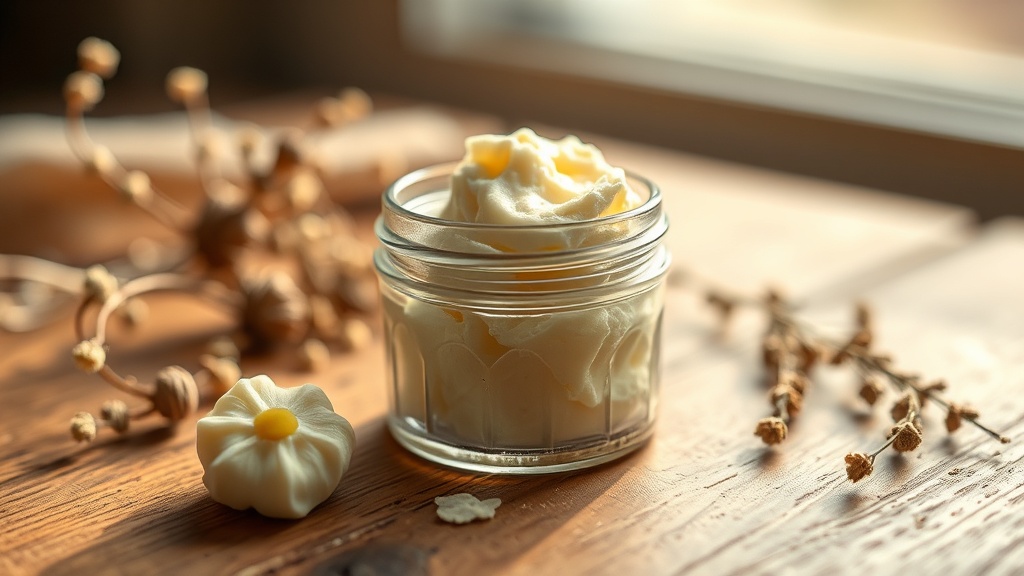
Shea butter melts at exactly the temperature of the human body. Take a little in your palms, wait a moment – and it transforms into a silky oil all on its own. Nature designed it to adapt to us. As if it always knew we would need it one day.
How to use it naturally and simply
The most beautiful thing about shea butter is that it needs no instruction manual. Simply keep it at home and reach for it whenever your skin asks. But a few gentle pointers:
- Apply it to still-slightly-damp skin – right after a shower works beautifully. The moisture gets sealed in beneath the butter and the effect is far more intense.
- Use it on your face carefully and in small amounts – especially if you have oily or combination skin. For dry and normal skin, it makes a wonderful overnight cream.
- In summer, blend it with a few drops of lavender or chamomile essential oil for a fragrant, all-natural body butter.
- Look for labels that say raw or unrefined – that is your assurance the butter has kept all its natural goodness intact.
Where to find it and what to watch for
Shea butter is easy to find in health food shops, pharmacies, or online. A larger jar is very affordable and lasts a surprisingly long time, because a little truly goes a long way. Avoid products where shea butter appears near the very end of the ingredient list – there is so little of it there that your skin will barely notice.
And if you have never tried pure, raw shea butter – buy a small jar. Just like that. Without expectations. Let it melt in your palms and smooth it onto dry elbows or heels. Then make yourself a cup of tea and wait until morning. Your skin will say thank you in a way that needs no words at all.