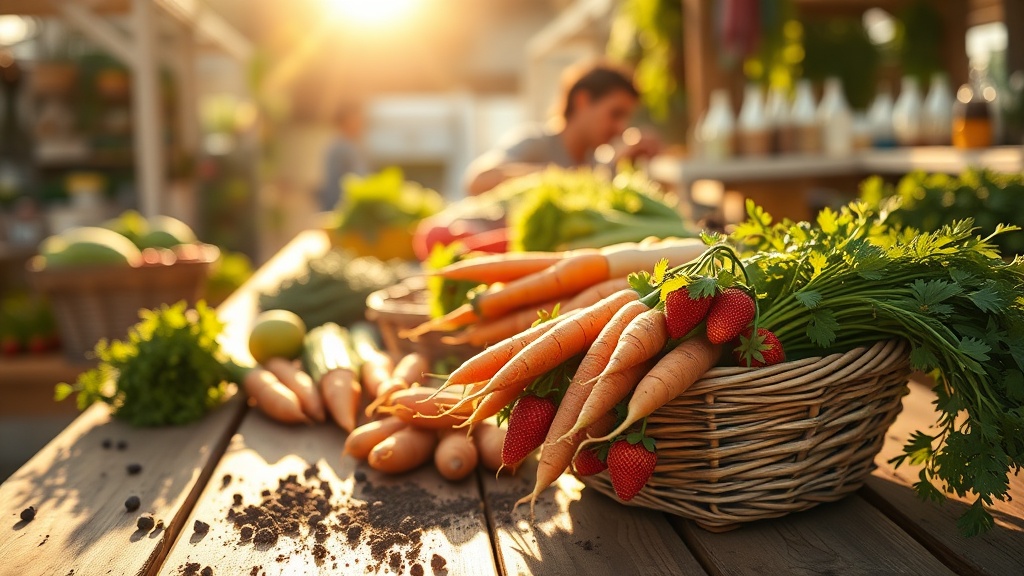
Picture a morning market. The air smells fresh, the vegetables still carry traces of soil, and you are choosing. Perhaps you have never stopped to wonder whether those tomatoes arrived in the world with the help of dozens of chemical treatments, or whether they grew in earth that was tended with care. But that question – quiet and unhurried – is worth asking at least once.
What We Eat Along With Our Food
Conventional farming uses pesticides – substances designed to protect crops from pests and moulds. That sounds reasonable enough. The trouble is that these substances do not stay on the field. They seep into the skin, the flesh, the water we drink. And our bodies, as wonderfully adaptable as they are, still have to process them.
Organic farming does not use these synthetic preparations. Instead it works with natural methods – crop rotation, compost, natural predators. The result? Food with significantly lower pesticide residues. A difference our bodies quietly appreciate, even if it never appears on any label.
Your Body as a Garden, Not a Factory
Our cells are like small gardens. They thrive on clean water, light, movement, and food free from unnecessary chemical burden. Pesticides belong to a group of substances that can disrupt hormonal balance – so-called endocrine disruptors. Some behave in the body similarly to oestrogen; others block natural signals. All in small, daily doses that quietly accumulate.
This is not about fear. It is about awareness. About the fact that when we have a choice, it is a lovely thing to use it.
Organic Does Not Mean Perfect – But It Does Mean Better
Organic food is not a miracle. It is not always available or affordable for everyone, and that is perfectly fine. Nobody is asking you to rebuild your entire shopping basket overnight.
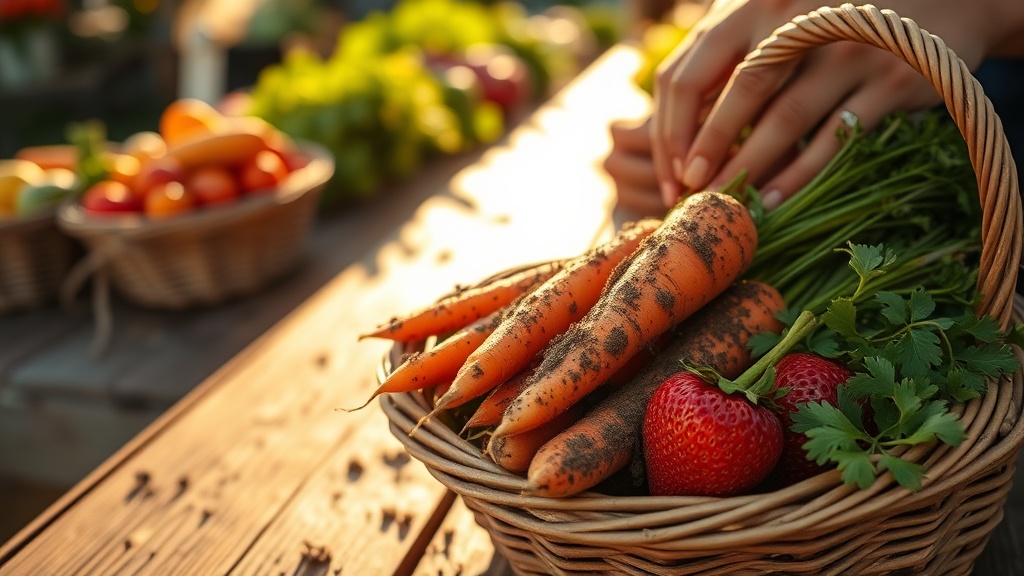
But here is one beautiful observation worth keeping: not all foods are equal in this regard. There is something called the Dirty Dozen – a list of crops that, when conventionally grown, carry the highest pesticide residues. Strawberries, spinach, peppers, peaches, grapes, cherries and apples are among them. These are the foods where switching to organic makes the most sense.
On the other side sits the Clean Fifteen – crops like avocado, sweetcorn, pineapple and onion, where conventional growing leaves only minimal traces. Here you can happily choose the conventional option and save your budget for what truly matters.
Small Steps That Add Up
Change does not have to be dramatic. Try one small shift this week: buy organic strawberries instead of conventional ones. Or visit a farmers market and choose vegetables from a grower you can talk to – even without an organic certificate, they may farm far more gently than you would expect. Ask them. People at markets love to tell their stories.
At home, always wash your vegetables thoroughly – even organic ones. Peel the skins of conventional produce where pesticides concentrate most. And if you are cooking for children, whose bodies are more sensitive to these substances, the organic choice makes especially good sense.
Food as Self-Care
Choosing organic food is not only a matter of health. It is also a way of relating to food with respect – to what we eat, where it comes from, how it was grown. It is a small act of care for yourself, repeated three times a day, every single day.
And perhaps that is where the greatest power lies. Not in one grand decision, but in a thousand small, gentle choices that quietly build into a way of living that truly suits you.
Start where you are. With what you have. And let each meal be just a little more intentional than the one before.