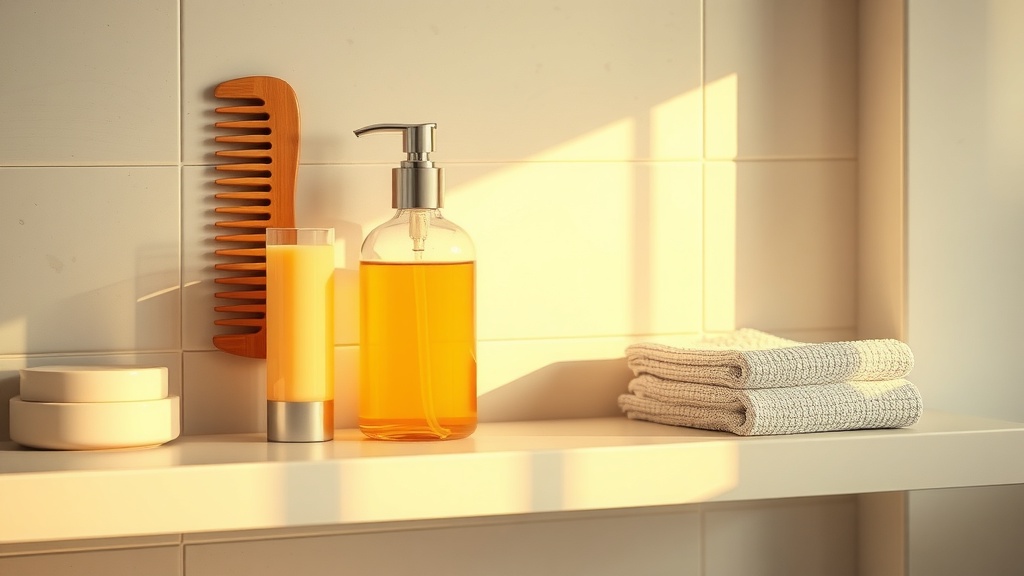
Every morning, without thinking, we reach for the shampoo bottle, lather up, and rinse. It's one of the most automatic rituals of the day. Yet the scalp is one of the most vascular areas of the body, and what we apply there is readily absorbed. It's worth knowing exactly what's in that bottle.
What's hiding inside
- Sulphates (Sodium Lauryl Sulfate, SLS; Sodium Laureth Sulfate, SLES). Powerful surfactants responsible for the rich lather that removes oil and dirt. They form the backbone of most conventional shampoos and are listed by their abbreviations on the label.
- Parabens (methylparaben, propylparaben, butylparaben, ethylparaben). Preservatives that extend shelf life. Still widely used in conventional shampoos. Look for any ingredient ending in -paraben on the label.
- Synthetic fragrance (Fragrance, Parfum). A catch-all term for a blend of aromatic chemicals that can contain dozens of individual compounds, including phthalates. Manufacturers are not required to disclose what's inside a fragrance blend, making this label entry essentially opaque.
- Phthalates (diethyl phthalate, DEP). Used as fragrance carriers or to stabilise texture. They are typically hidden under the term Fragrance or Parfum and won't appear by name on the label.
- Formaldehyde-releasing preservatives (DMDM Hydantoin, Quaternium-15, Imidazolidinyl Urea, Diazolidinyl Urea). These preservative systems work by slowly releasing small amounts of formaldehyde to prevent bacterial and mould growth inside the product.
- Silicone polymers (Dimethicone, Cyclomethicone, Cyclopentasiloxane, and other ingredients ending in -cone or -siloxane). Added for smoothness and shine. They coat the hair shaft and scalp with a film that doesn't wash away easily.
- Synthetic dyes (CI numbers, FD&C or D&C colorants). Give the shampoo its appealing colour. Some synthetic dyes are derived from petrochemical sources.
- Polyethylene glycols (PEG compounds). Thickeners and humectants that may be contaminated with 1,4-dioxane, a by-product of the manufacturing process.
What these substances do to our body
- Sulphates (SLS, SLES) can disrupt the scalp's natural protective barrier, leading to dryness, irritation, and itching. Sensitive skin and children's skin are particularly susceptible. Repeated use can also trigger overproduction of sebum, creating a cycle that's hard to break.
- Parabens are classified as endocrine disruptors. They have weak oestrogenic activity, meaning they can mimic oestrogen in the body and interfere with hormonal balance. They are of particular concern for children's development and reproductive health.
- Synthetic fragrances and phthalates are among the most common causes of contact dermatitis and allergic reactions. Phthalates are also endocrine disruptors that may affect hormone levels. Pregnant women and young children are considered more vulnerable.
- Formaldehyde-releasing preservatives are classified as probable carcinogens. Daily skin contact can cause irritation and allergic reactions, and long-term cumulative exposure may place a burden on the immune system.
- Silicone polymers are not acutely toxic, but the film they build up on the scalp can block hair follicles, impede natural skin respiration, and over time contribute to hair thinning or brittleness.
- PEG compounds and 1,4-dioxane are concerning because 1,4-dioxane is a probable carcinogen and its presence as a manufacturing contaminant does not need to be declared on the label.
Non-toxic alternatives
- Sulphate-free, paraben-free natural shampoo. Look for products certified COSMOS Organic or NATRUE – these certifications mean the formula has been independently verified. The lather will be less dramatic than you're used to, but your scalp adjusts within two to four weeks. In the Czech Republic, try dm's Alverde range, Botanicus stores, or online shops like Tierra Verde and Nobilis Tilia.
- Solid shampoo bar. A concentrated, waterless format with no plastic packaging. Quality bars use amino-acid-based or coconut-derived surfactants rather than SLS. Check the ingredient list to confirm no SLS and no synthetic fragrance. Czech brand Almara Soap and Lush are good starting points, available online and in stores.
- Dry shampoo with clay or rice starch. For days between washes. Kaolin clay or arrowroot powder absorb excess sebum with no synthetic chemicals. Available ready-made in pharmacies and health food shops, or easy to make at home.
- Homemade castile soap shampoo. Diluted castile soap (Dr. Bronner's or Sonett) mixed with water and a few drops of essential oil makes a simple shampoo with a minimal ingredient list. Follow with an apple cider vinegar rinse (one tablespoon in a cup of water) to restore the scalp's natural pH.
- Ayurvedic powder shampoos (shikakai, amla, reetha). Traditional plant powders that cleanse gently without synthetic surfactants. Mix with water to form a paste and apply like a regular shampoo. Available in health food stores or Indian grocery shops in larger cities.
There's no need to overhaul everything at once. When your current bottle runs out, simply reach for one of these alternatives instead. Each small swap is an act of care – for yourself and for everyone who shares your bathroom.