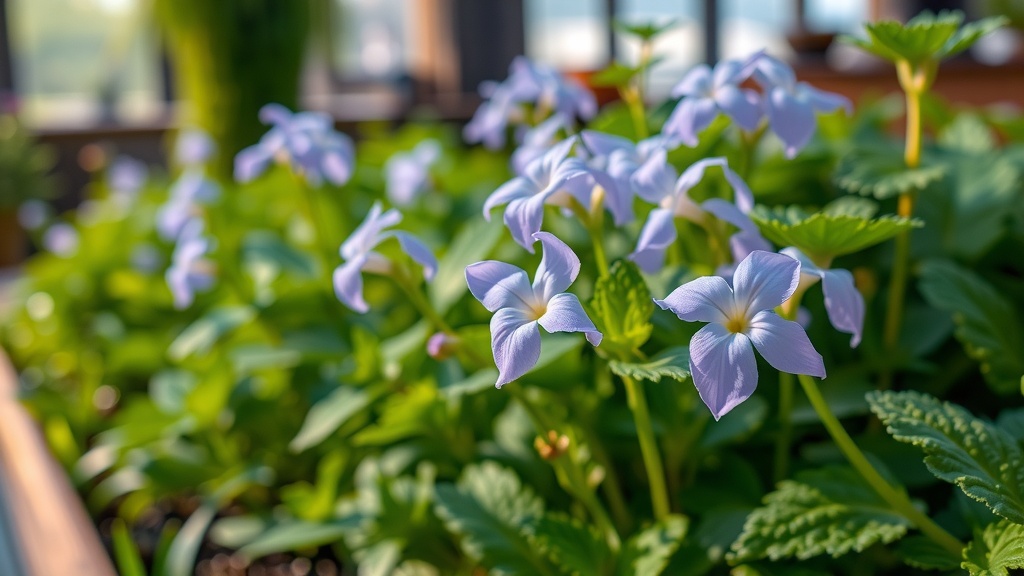
Every spring, small purple flowers appear along garden edges, beneath old trees, and beside fences – and most of us walk right past them. Yet the sweet violet, whose Latin name Viola odorata tells you the most important thing straight away, is one of Central Europe's oldest culinary and healing herbs. Its scent is delicate, almost mysterious: you catch it for a moment, and then it seems to vanish. That is not your imagination – violet contains a compound that temporarily dulls the scent receptors in your nose. A quiet little trick from nature.
What violet quietly does for us
Sweet violet has been used in folk herbalism for centuries, and with good reason. Both its leaves and flowers are edible, carrying a gentle, earthy warmth. A tea made from violet leaves soothes an irritated throat and eases the first signs of a cold. Added to soup or a spring salad, the leaves bring an unexpected depth. And a syrup made from violet flowers – one of the loveliest gifts of the season – has a beautiful purple hue and a sweet, perfumed flavour that reminds you nature knows how to be playful.
Violet leaves are rich in vitamin C, so a spring salad scattered with a few leaves is not just poetic – it is genuinely nourishing. The flowers are lovely pressed onto desserts, stirred into herb butter, or simply floated in a glass of water on the table as a quiet greeting from the garden.
Where to find it and how to grow it
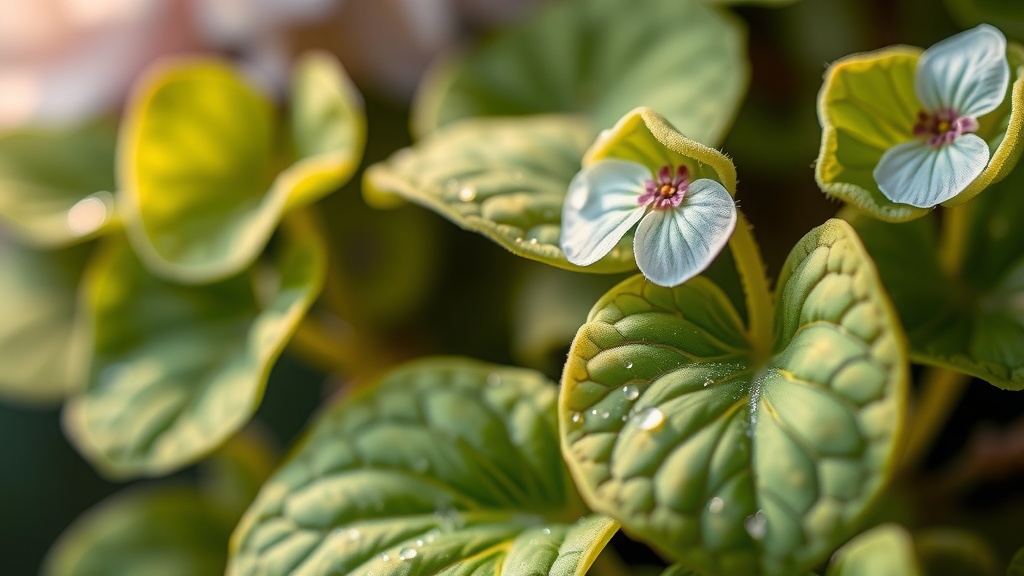
Sweet violet loves partial shade – it grows best beneath deciduous trees, along hedgerows, or on the north-facing side of a garden where the summer sun does not beat down. If you want it close to hand, plant it in a border near your terrace or along a garden path. It spreads gently by runners and returns each year more reliably than many other plants. Plant it once, and it will look after itself.
When foraging, one simple rule applies: pick only what you will truly use, and leave most of the flowers for the bees and bumblebees who love them just as much as we do. The best time to gather is early morning, when the flowers are full of fragrance and have not yet been warmed by the sun.
A small spring ritual worth trying
This spring, try making violet syrup. Fill a jar with fresh Viola odorata flowers, pour hot (not boiling) water over them, and leave to steep overnight. The next day, strain the liquid, add sugar and a squeeze of lemon juice – then watch as it transforms from greenish to a vivid, luminous violet. This small alchemical moment is worth experiencing at least once.
Violet teaches us that beauty does not need to be large or loud. It grows quietly, scents the air gently, and gives generously – returning each year without asking for any attention at all. Perhaps that is exactly why we love it so much.