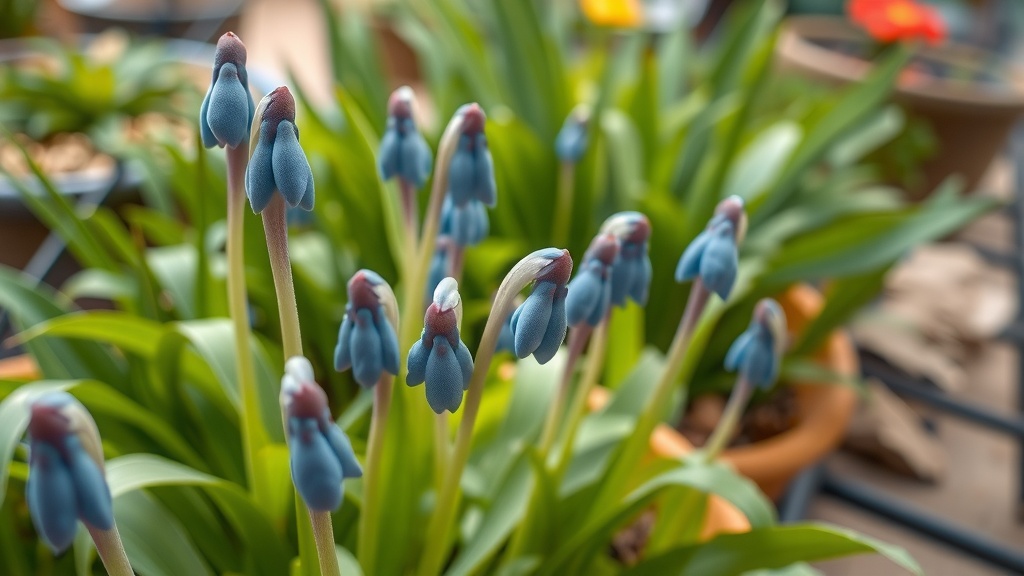
Some plants need very little space to make a lasting impression. Grape hyacinth – its Latin name Muscari armeniacum traces its origins to the mountain meadows of Armenia – is exactly that kind of plant. Quiet and unassuming for most of the year, then utterly unmistakable in spring. A bed densely planted with its violet-blue clusters looks as though someone draped a piece of summer sky across the garden floor.
A garden that wakes itself up
Grape hyacinth is a bulb plant, and that means one wonderful thing: plant it once and it takes care of itself. Every autumn the bulbs settle quietly into the soil, preparing for a burst of energy come spring. It needs no fussing over, handles frost without complaint, and does not need to be dug up each year. It simply shows up, reliably, season after season.
It thrives in a sunny or lightly shaded spot with well-draining soil. It looks beautiful beneath trees, along garden paths, or naturalised in a lawn where it forms soft, natural carpets. Pairing it with daffodils or tulips is a classic combination that never disappoints – grape hyacinth fills the gaps and makes the whole bed feel lush and generous.
What grape hyacinth quietly does for you and your garden
- It welcomes the first pollinators. Bees and bumblebees emerge hungry in early spring, and grape hyacinth offers them nectar before almost anything else is in bloom. Growing it is a small gift to the whole local ecosystem.
- It brings colour when you need it most. February and March days can feel endlessly grey. The sight of vivid blue clusters from a terrace or garden window lifts the mood in a way that is hard to explain but easy to feel.
- It spreads on its own, beautifully. Grape hyacinth multiplies naturally over the years. A handful of bulbs becomes a carpet without any effort on your part.
- It carries a gentle, sweet scent. Lean close to a flowering clump and you will catch a soft, faintly musky fragrance – which is exactly where the genus name Muscari comes from, derived from the Greek word for musk.
How and where to plant it
Bulbs are planted in autumn, ideally in September or October, about five centimetres deep. The more bulbs you plant together, the more striking the result – do not be shy about putting twenty or thirty in one spot. Garden centres sell them in bags, and if you have neighbours or friends with established gardens, there is a good chance they will happily share some, since grape hyacinth spreads generously.
One charming detail: grape hyacinth grows wild across Czech and Moravian meadows, woodland edges, and field margins. If you head out for a spring walk, you may well encounter it before you ever plant it at home.
A small flower, a large feeling
Grape hyacinth is a reminder that beauty does not need to be grand or complicated. A few bulbs tucked into the ground in autumn, and come spring you have a display that stops every passerby in their tracks. Plant some this year, and next spring you will be surprised by how much you miss that little blue carpet once it fades.