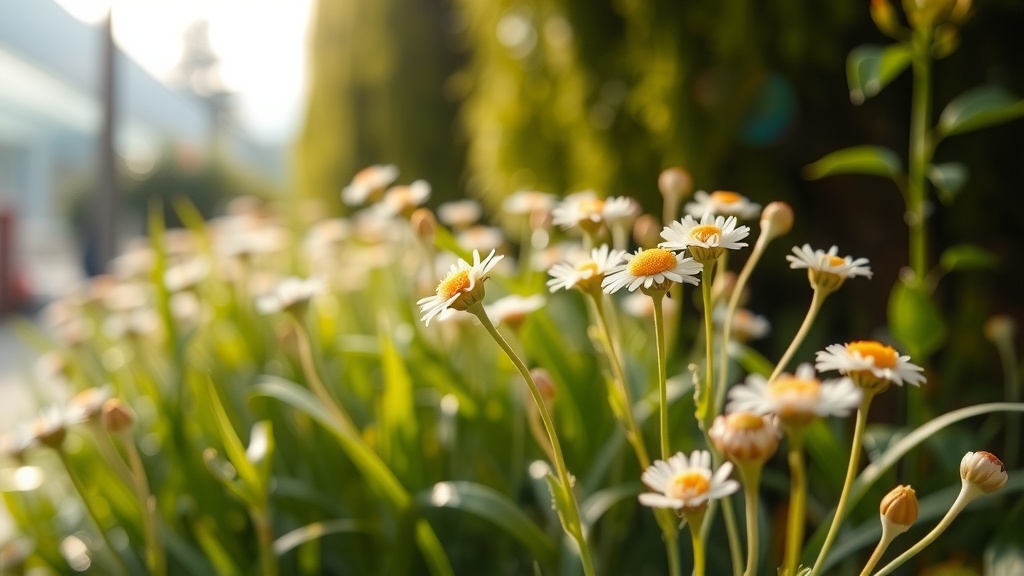
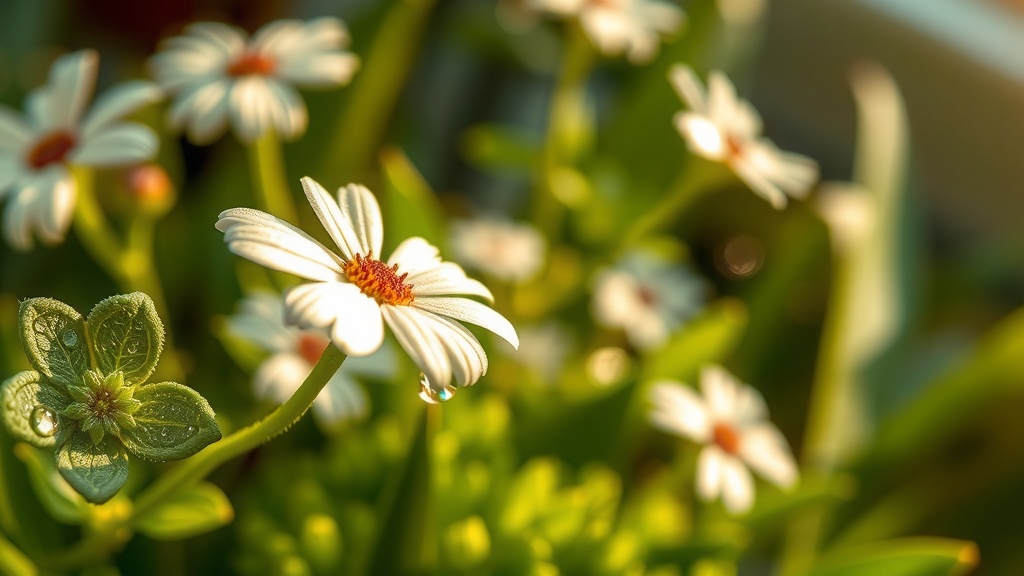
Some plants need no grand stage. Chamomile – whose Latin name Matricaria chamomilla comes from the word matrix, meaning womb or mother – has always been a herb of comfort and care. It grows freely along field paths, at the edges of gardens, between blades of grass. The small white flowers with their golden centres look modest, but their scent will stop you mid-step.
A herb that grows where you least expect it
Chamomile is an annual that spreads on its own – sow it once and it will return the following year. It loves sunny spots, light soil, and a little room to breathe. You will find it on meadows, along country lanes, in untended corners of the garden. Give it a spot by the fence or at the edge of a herb bed and it will ask for nothing more.
If you have no garden, chamomile will grow on a sunny balcony in a generous planter – but its true home is outdoors, where the breeze can reach it and the bees can find it. They love it just as much as we do.
What chamomile quietly does for us
- It calms and soothes. A cup of chamomile tea in the evening before bed is one of the oldest and simplest rituals of rest. Warmth, fragrance, a moment just for yourself.
- It is gentle on skin. A chamomile infusion added to a bath or used as a compress soothes tired or irritated skin with quiet kindness.
- It eases digestion. After a heavy meal or when the stomach feels tense, chamomile tea is a gentle companion the body recognises and welcomes.
- It brings summer indoors. Dried bunches of chamomile in the kitchen or bedroom carry a soft, sweet fragrance that lingers like a warm afternoon.
- It invites you to slow down. Picking chamomile is a meditation in itself – you bend down, you breathe in, you hear the hum of bees. A moment that brings you back to the present.
How to harvest and dry it
Chamomile is best picked when the flowers are fully open, before the yellow centres have risen into a dome. The ideal time is mid-morning, once the dew has lifted. Pick just the flower heads and leave the stems to the plant. Spread them in a thin layer on a clean cloth or paper and dry in a shaded, airy spot. Within a week or two, you will have a supply to carry you through the winter.
One beautiful thing about chamomile: the more you pick, the more it blooms. It is a herb that rewards generosity.
A small ritual for this week
If you have a garden or balcony, sow a pinch of chamomile seeds this week. They are tiny – press them gently into moist soil and leave them to it. If you have no garden, take a walk to a nearby meadow or field path and look for little white stars with a honey scent. Pick a small handful, bring them home, and brew your first cup of tea from your own gathering.
Chamomile reminds us that the most valuable things are often the most unassuming. It grows by the roadside, blooms without fuss, and takes care of us quietly. Exactly like the best things in life.