In April, when the forest floor stirs back to life and the first light filters through bare branches, it appears. Wild garlic, known botanically as Allium ursinum, spreads across damp woodland slopes and stream banks in a lush green carpet that feels like the forest exhaling after a long winter. Its Latin name hints at the bears who seek it out eagerly after hibernation, drawn instinctively to its restorative freshness. There is something wise in that.
What wild garlic does for your body and mood
Fresh wild garlic leaves carry everything the body craves in spring. They help cleanse and refresh the system after months of heavy food and cold air, gently support digestion, and give a natural lift to the immune system. Their scent, bright and green and unmistakably garlicky, wakes up the senses in the best possible way. Even the walk to find them, through a quiet wood with light coming through the canopy, is its own kind of medicine.
- Cleanses and refreshes the body after the heaviness of winter
- Supports digestion and a sense of lightness
- Strengthens natural immunity through the goodness in fresh leaves
- Lifts the mood – the scent of freshly picked leaves is genuinely uplifting
Where to find it and how to forage
Wild garlic grows in deciduous and mixed woodland, especially near streams and in the shade of old beech and hornbeam trees. The season is beautifully brief – April through May, before the plant flowers and the leaves toughen. When foraging, always smell before you pick. The scent of true wild garlic is unmistakable: fresh, green, and distinctly garlicky. This is important, as the leaves can be confused with lily of the valley before flowering, so the nose is your safest guide.
Pick gently, taking only a few leaves from each plant, and leave the patch as you found it. A forest that is treated with care will welcome you back every spring.
How to use it in the kitchen
Fresh leaves are the treasure. Blend them into a smooth pesto with olive oil and walnuts, stir them into soft cheese with butter for a simple spring spread, or scatter them over soup at the very last moment. Wild garlic does not like heat – long cooking dulls its flavour and diminishes its goodness, so always add it at the end, or enjoy it raw.
A lovely spring habit is to make a small wild garlic spread or add a handful of leaves to a morning smoothie every day for two weeks. Your body will notice the difference, and you will find yourself looking forward to this ritual every April.
A small woodland secret
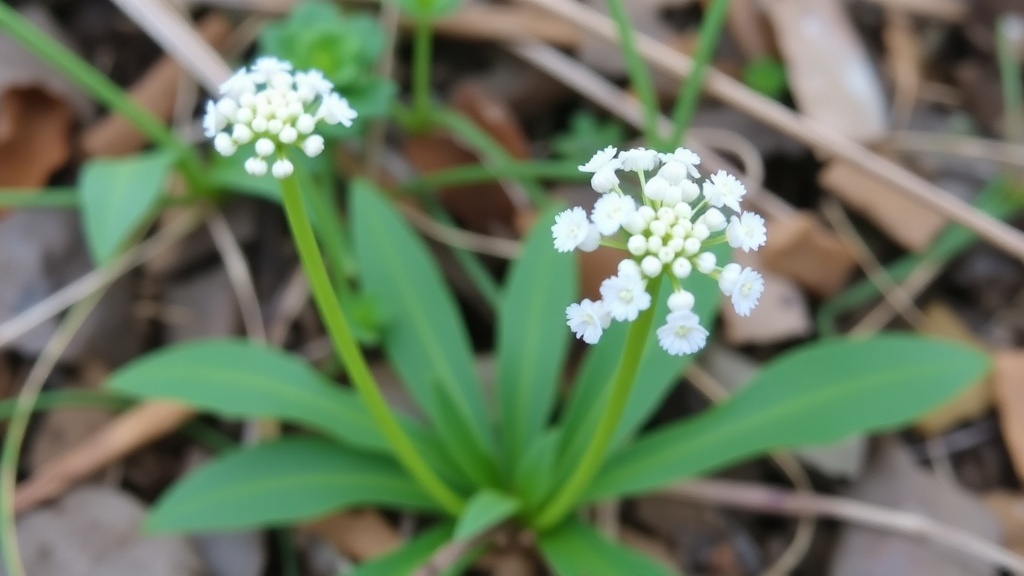
The white star-shaped flowers of wild garlic are not just beautiful – they are edible too. Scatter them over a spring salad or use them to garnish a simple starter. They are milder than the leaves, with a delicate, slightly peppery bite. The small green seeds that form after flowering can be pickled in vinegar as a homemade caper substitute. Every part of the plant offers something, and nothing goes to waste.
Wild garlic does not need your windowsill or your garden bed. It simply needs you to pull on your walking shoes once a spring, breathe in the cool forest air, and bring home a handful of green that smells like the beginning of everything fresh. That is its gift.