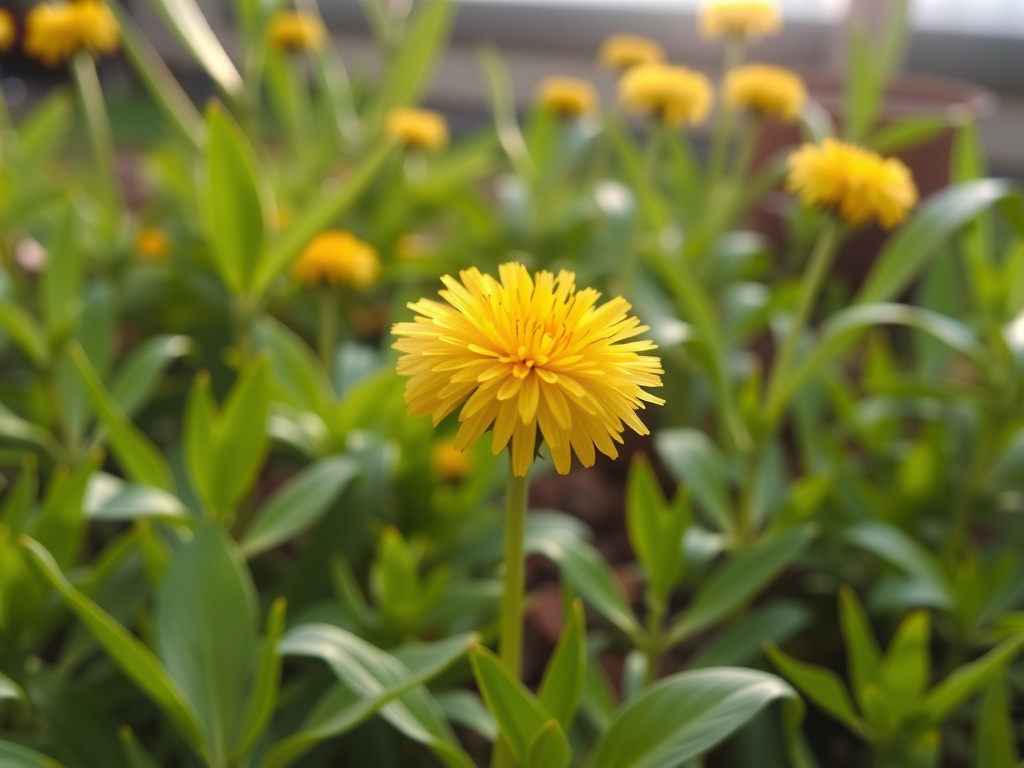
When the first golden flowers appear in the meadow each spring, many of us walk right past them – or reach for a trowel. And yet the dandelion, whose Latin name Taraxacum officinale literally means 'the healing one', grows precisely where we need it most. Along roadsides, in gardens, on sunny slopes. It never waits for an invitation. It simply arrives.
A herb that belongs to the wild
The dandelion is a truly wild plant – and that is its greatest beauty. It needs no flower bed, no careful tending. All it asks for is open ground, a little sun, and soil deep enough for its surprisingly long taproot, which can reach thirty centimetres down, drawing up minerals that other plants cannot reach. Nature knows what she is doing.
If you have a garden or a country cottage, leave a corner of lawn for the dandelion. It will draw in bees and bumblebees at the very moment when other flowers are still asleep. It is one of the earliest spring food sources for pollinators – and that alone makes it worth welcoming.
What the dandelion quietly offers us
- A gentle spring reset. The leaves and root have long been used to support digestion and liver function. The bitter taste of young leaves is no accident – it gently wakes the digestive system after winter's long rest.
- Vitamins straight from the meadow. Young leaves are rich in vitamin C, vitamin A, and potassium. Add them to a spring salad while they are still tender and pale green.
- Root tea with an earthy warmth. Dried dandelion root makes a gently bitter, grounding tea. Harvest the roots in autumn when they are at their strongest, and dry them slowly in open air.
- Dandelion syrup. The golden flowers can be simmered into a fragrant syrup that tastes like bottled sunshine. All you need is flowers, water, sugar, and a squeeze of lemon.
How to work with it – in nature and in the kitchen
Gather dandelions from places you know well – far from roadsides, free from sprays or chemicals. The best time for leaves is early spring, before the plant flowers, when they are at their most tender. Collect flowers on a sunny morning when they are fully open. Dig roots in autumn, rinse them well, slice them, and leave them to dry slowly in a warm, airy spot.
One thing that surprises almost everyone: the dandelion blooms in waves all summer long, not only in spring. After rain, step outside and look at the nearest meadow – and there she will be again, fresh and golden, as though she never left.
A small ritual for every spring
Try one simple thing this year: step outside early on a spring morning, find a meadow full of dandelions, and gather a handful of young leaves. Rinse them at home, toss them with a little olive oil, lemon juice, and a pinch of salt. A simple salad that tastes exactly like the beginning of a new season.
The dandelion does not teach us complicated things. It teaches us to look differently at what grows all around us. And perhaps that is its greatest gift of all.